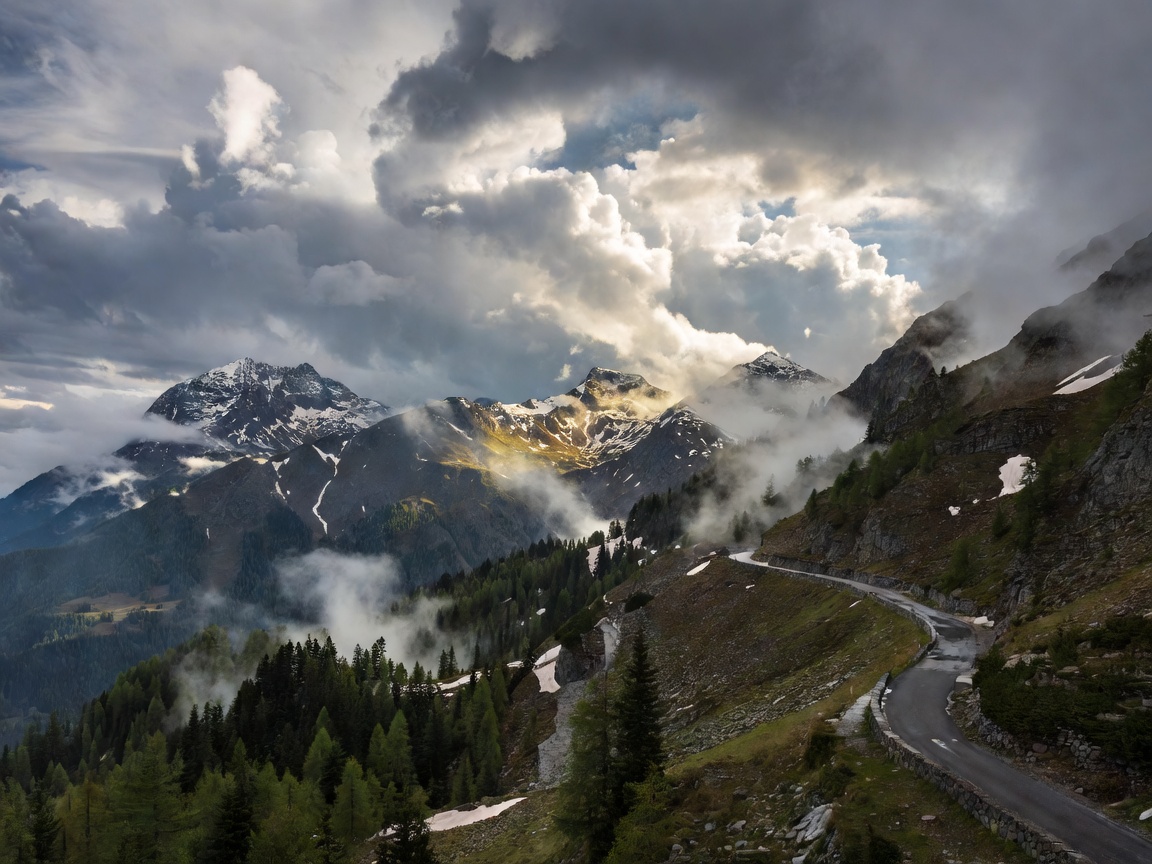
CONDITIONS / SEASONAL GUIDE
The same road can feel very different across a year, or even during a single day. Higher ground may experience colder temperatures, reduced visibility and different precipitation from nearby valleys. Seasonal notes help frame a plan, but current official information should decide whether you travel.
Spring: snowmelt and changing surfaces
Spring can bring a mix of wet pavement, lingering snow, runoff and debris. Temperatures may vary sharply between shaded valleys and exposed slopes. Some high roads may remain closed or have limited services, while lower roads can still be affected by local weather or maintenance. Confirm opening status and restrictions rather than relying on a typical calendar date.
Do not drive through flowing water, around a closure or onto a snow-covered road beyond the vehicle’s and driver’s capability. Meltwater can conceal surface damage and make shoulders soft. Allow extra time and be ready to use an alternative.
Summer: storms, traffic and heat
Longer daylight does not remove the risk of sudden showers, thunderstorms, cloud or strong winds. Traffic, cyclists, motorcycles and holiday congestion can slow travel, especially near popular passes. Plan safe stops in advance and never stop on a blind bend or in a place that obstructs others.
Higher temperatures and sustained climbs can add demands on a vehicle. Make sure it is maintained, do not exceed its limits, and stop safely if a warning light or overheating concern appears. Keep water available and avoid leaving people or animals unattended in a hot vehicle.
Autumn: shorter days and variable grip
Daylight shortens, mornings can be cold and shaded sections may remain damp. Wet leaves, loose material and early frost can affect traction. Build a larger time margin than the map suggests, and plan to complete the route in daylight where practical. Recheck pass access as services and operating arrangements may change toward the end of the season.
Winter: traction, closures and exposure
Winter driving can involve snow, ice, poor visibility, strong winds and severe cold. Roads may be closed, restricted or subject to mandatory equipment rules. Requirements differ by location and date, so check local laws, official road notices and the vehicle manufacturer’s guidance before travel. Carrying winter equipment does not make every road or weather condition safe.
Do not set out on a route if the vehicle, tires, experience or forecast are not appropriate. If conditions worsen, use a legal safe place to stop or turn back. Avoid relying on a phone signal, a single forecast or a navigation app to assess a hazardous road.
Check the journey, not just the season
Review forecasts at relevant elevations and along the route. Check official road status, closures, works and warnings shortly before departure and again when conditions may change. Consider the whole group: driver fatigue, passenger needs, vehicle condition and time available all affect whether the plan remains sensible.
Seasonal planning checklist
- Check current road status, access rules, restrictions and local weather warnings.
- Consider elevation, shade, exposure, daylight and likely surface conditions.
- Confirm vehicle tires and equipment meet local requirements and the journey’s needs.
- Allow time for congestion, stops and diversions; keep an alternative ready.
- Postpone or change plans when visibility, traction or confidence is inadequate.
Seasonal awareness is a reason to plan with margin, not a guarantee of access. Follow current local advice and choose a safer alternative whenever conditions require it.